For most small backyard or garage saunas, electric heat is the more practical choice because it needs no chimney, no dry wood storage, and reaches a set temperature on a predictable timeline of 30 to 45 minutes. Wood heat can still work in a tight footprint, but it demands a chimney clearance to combustibles, a spot for stacked fuel, and more hands-on tending per session. Neither option is wrong; the decision usually comes down to how much extra footprint a household is willing to give up and how much someone actually enjoys the process of building and tending a fire.
Step 1: Decide How Much Space You Actually Have
Start by measuring the real footprint available, not just the cabin’s exterior dimensions. An electric heater needs only its own clearance envelope plus a run for a dedicated circuit. A wood-fired heater needs that same clearance plus a chimney penetrating the roof or wall with its own combustible clearance rules, and a dry, covered spot for split wood within easy carrying distance of the door. In a yard corner that’s already tight, the chimney and wood storage requirement is frequently what rules wood heat out before cost or preference even enter the conversation.
Step 2: Compare Heat-Up Time and Session Feel
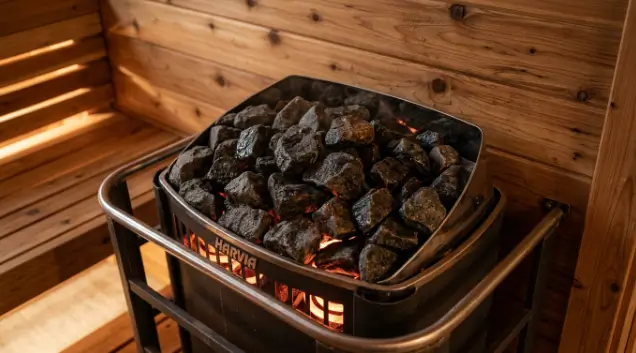
Electric heaters generally reach operating temperature in a consistent 30 to 45 minutes and hold it there with a thermostat, which makes scheduling a session predictable. Wood-fired heaters can take a similar amount of time once the fire is established, but the ramp-up depends on wood quality, how well the fire is tended, and outdoor temperature, so the timeline is less consistent session to session. Many longtime sauna users describe wood heat as producing a softer, more humid löyly when water hits the stones, a subjective quality electric users sometimes chase with a stone tray designed to hold more residual heat.
Step 3: Check What Electrical or Venting Work Each Option Needs
A 6kW electric heater typically needs a dedicated 240-volt circuit run from the panel, which for many small installs is a single afternoon of electrical work. A wood-fired heater instead needs a UL or equivalent-listed chimney system installed to code, with roof or wall penetration, proper flashing, and clearance to any nearby combustible material, plus in many jurisdictions a permit and inspection specific to solid-fuel appliances. Homeowners should call a local electrician for a quote on the circuit and, separately, check local code on wood-burning appliances before assuming either path is simple.
Step 4: Compare Ongoing Costs and Maintenance
Electric heaters have essentially no fuel cost beyond electricity itself and very little routine maintenance beyond periodic stone replacement. Wood-fired units need a steady, seasoned firewood supply, which can be cheap or even free for someone with land and a chainsaw, or a real recurring cost for someone buying split wood by the cord. Wood heaters also need the flue cleaned periodically to reduce creosote buildup, an upkeep task electric heaters simply don’t have. Add up both the dollar cost and the time cost before deciding which one actually fits a normal week.
Step 5: Match the Heater to How Often You’ll Use It
A heater used several times a week benefits most from electric’s low-effort consistency, since starting a wood fire from scratch four or five times weekly adds up in both time and fuel. A heater used occasionally, especially by someone who genuinely enjoys the process, can make wood heat’s extra effort feel like part of the experience rather than a chore. Matching the heater type to realistic usage, not aspirational usage, is the step people skip most often, and it’s usually the reason a wood-fired build sits unused after the first winter.
What Does the Research Say About Regular Sauna Use?
Heat source doesn’t appear to change the underlying health associations studied in the research, since most studies look at sauna bathing broadly rather than distinguishing electric from wood-fired heat. A systematic review in Evidence-Based Complementary and Alternative Medicine summarized cardiovascular and other associations tied to regular dry sauna bathing. An earlier review in The American Journal of Medicine covered both benefits and documented risks of sauna use more broadly. These findings are associations built on population data, not a guarantee for any individual, and they apply about equally regardless of which heater type produces the heat.
What Does a Realistic Budget Look Like for Each Path?
An electric 6kW package generally runs less upfront than a comparable wood-fired setup once the chimney kit, roof flashing, and installation labor for solid-fuel venting are added to the wood-fired heater’s own price. The electric side instead concentrates its cost into the dedicated circuit, which a licensed electrician typically quotes as a flat job rather than a per-part cost. Buyers should get both quotes, chimney installation for wood and circuit installation for electric, before comparing sticker prices, since the heater itself is often the smaller line item once installation is priced honestly. Ongoing costs split the difference: wood fuel can be inexpensive with a reliable local source, while electric has no fuel cost but a small, predictable addition to the monthly power bill.
For anyone landing on electric as the more realistic option for a tight footprint, comparing published clearance and amperage specs across models is worth the time before ordering. Shoppers narrowing down a compact package can look at the SweatDecks the HUUM Drop collection page, where clearance and circuit requirements are listed by kilowatt size.
Frequently Asked Questions
Is electric or wood heat better for a small sauna? Electric heat generally fits a small space better since it needs no chimney or wood storage and reaches temperature predictably. Wood heat suits owners who value the ritual of a fire and have room for fuel storage and chimney clearance.
How much space does a wood-fired heater need beyond the cabin itself? A chimney with clearance to combustibles, plus dry storage for split wood, often adds several feet of footprint that an electric install doesn’t require.
Does electric heat feel different from wood heat in a sauna? Many longtime users describe wood heat as softer and more humid due to the löyly it produces, while electric is more consistent and easier to dial to an exact temperature.
Which costs less to run, electric or wood? Wood fuel can be cheaper per session where firewood is easy to source, but electric heaters need far less labor and no fuel storage. The real cost depends on local firewood prices versus the local electric rate.
References
- Clinical Effects of Regular Dry Sauna Bathing: A Systematic Review, Evidence-Based Complementary and Alternative Medicine, 2018
- Benefits and risks of sauna bathing, The American Journal of Medicine, 2001
- Does the Combination of Finnish Sauna Bathing and Other Lifestyle Factors Confer Additional Health Benefits? A Review of the Evidence, Mayo Clinic Proceedings, 2023
By Priya Anand