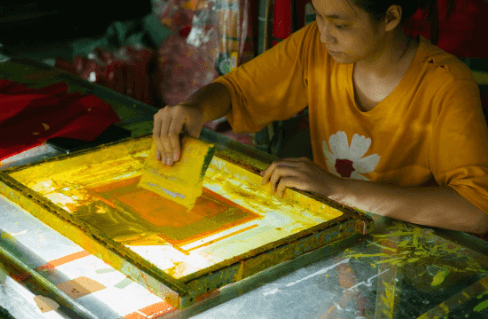
Screen printing prices are one of the most common concerns for businesses and customers. Hence, before ordering, it is important to understand the factors that influence prices. Primarily the price depends on the order size, the design complexity, the materials, and the production methods. So, understanding how these factors are calculated can help a customer make informed decisions. Moreover, transparent pricing builds trust and long-term relationships with customers.
What Are The Key Factors That Influence Screen Printing Prices?
The primary factors that influence the screen printing prices include:
Order Quantity
The quantity of order is the main factor in price variation. Although the setup costs remain the same, larger orders spread the costs across more units. Hence, the prices drop significantly when the volume is high. So, it is ideal for corporate uniforms, event merchandise, and promotional campaigns.
Quantity of Ink Colours
In screen printing, each colour requires a separate screen. Hence, more colour means more setup time, screens, and labour. Hence, single-ink designs are more affordable than multi-colour designs.
Complexity
Simple logo designs cost less compared to detailed artworks. This is because detailed artwork requires higher mesh screens, advanced exposure techniques, and more test prints. Also, halftones, gradients, and photo-realistic designs increase costs. Whereas complex registration adds labour time.
Ink Type
Ink choice also impacts screenprinting prices. Some common types of inks include plastisol, water-based, discharge, and specialty inks. Here, specialty inks require extra care and increase pricing.
Screen Set-up and Artwork
The screen setup is often a one-time charge. This charge covers screen coating, exposure, and film positives. Hence, reorders are cheaper if screens are reused, and some shops can also waive setup fees for large orders.
Garment Type
A blank garment cost affects the total pricing. In general, printing on cotton is cheaper than on polyester, as polyester requires special inks. Also, dark garments often require underbase layers, which can affect the price. Apart from these, printing on non-fabric items like plastic, metal, or glass increases cost.
Location & Size
Screen prints that contain only fonts cost less than images. Also, additional locations such as black sleeves, sleeve prints, and neck labels increase the price. A large print area requires more ink and time; hence, oversized prints increase costs.
Manual Vs Automated Printing
Manual printing has lower overhead and higher labour costs per unit. So, they are best for small to medium orders. Whereas automated printing has a higher setup investment but lower per-unit cost at scale. It also has a faster production speed. Hence, automated shops often offer better bulk pricing.
Delivery Time
In screen printing, standard production timelines are more affordable. Rush orders increase prices as they require overtime labour and priority scheduling. Also, advanced planning significantly reduces costs. Hence, it is advisable to plan ahead and give the printing company enough time to produce the orders without any extra cost.
Additional Services
Add-on services other than screen printing also increase the price. For instance, services like tag removal, relabelling, folding and bagging, size sorting, and custom packaging increase the price. Apart from these, a few of the hidden costs might include:
- Cost of materials
- Labour costs
- Overhead and utilities
- Fluctuating market rates
How to Reduce Screen Printing Prices?
Customers looking to order screen printing can reduce prices by:
- Ordering in larger quantities
- Choosing fewer ink colors
- Using standard garment colors
- Avoiding last-minute changes
- Planning orders in advance
Why Should You Opt for Screen Printing?
Apart from screen printing, there are other options on the market, such as digital printing and DTF/DTG. Here are a few reasons to opt for screen printing:
See also: WhatsApp web version login tools empowering Telegram download digital communication teams
Screen Printing vs Digital Printing
Screen printing has lower per-unit costs for bulk orders but higher setup costs. But it provides superior durability. Whereas in digital printing, there are no setup fees but a higher per-unit cost. Also, it is best for small runs.
Screen Printing vs DTF/DTG
Compared to DTF/DTG, screen printing is best for large and repeat orders. It also provides long-lasting prints. Whereas DTF/DTG is better for small, customized runs and has a higher cost per unit.
Why Bulk Orders Reduce Screen Printing Prices?
Bulk orders reduce prices because the screen can be reused, reducing ink waste in long runs. Moreover, machine setup is done once, and labour efficiency also improves with repetition.
Conclusion
Hence, screen printing prices may depend on multiple factors. Among those, order quantity and design simplicity are the biggest factors. Also, understand that the cheapest option is not always the best, as lower prices may be due to inferior inks, a short print lifespan, and poor curing. Regardless of the options available in the market, screen printing is one of the most affordable options for bulk design. Screen printing also gives long-term value. For instance, durable prints will reduce replacement costs, and high-quality prints will enhance brand credibility. Hence, it is ideal for corporate clients, event organizers, artists, and promotional buyers.